

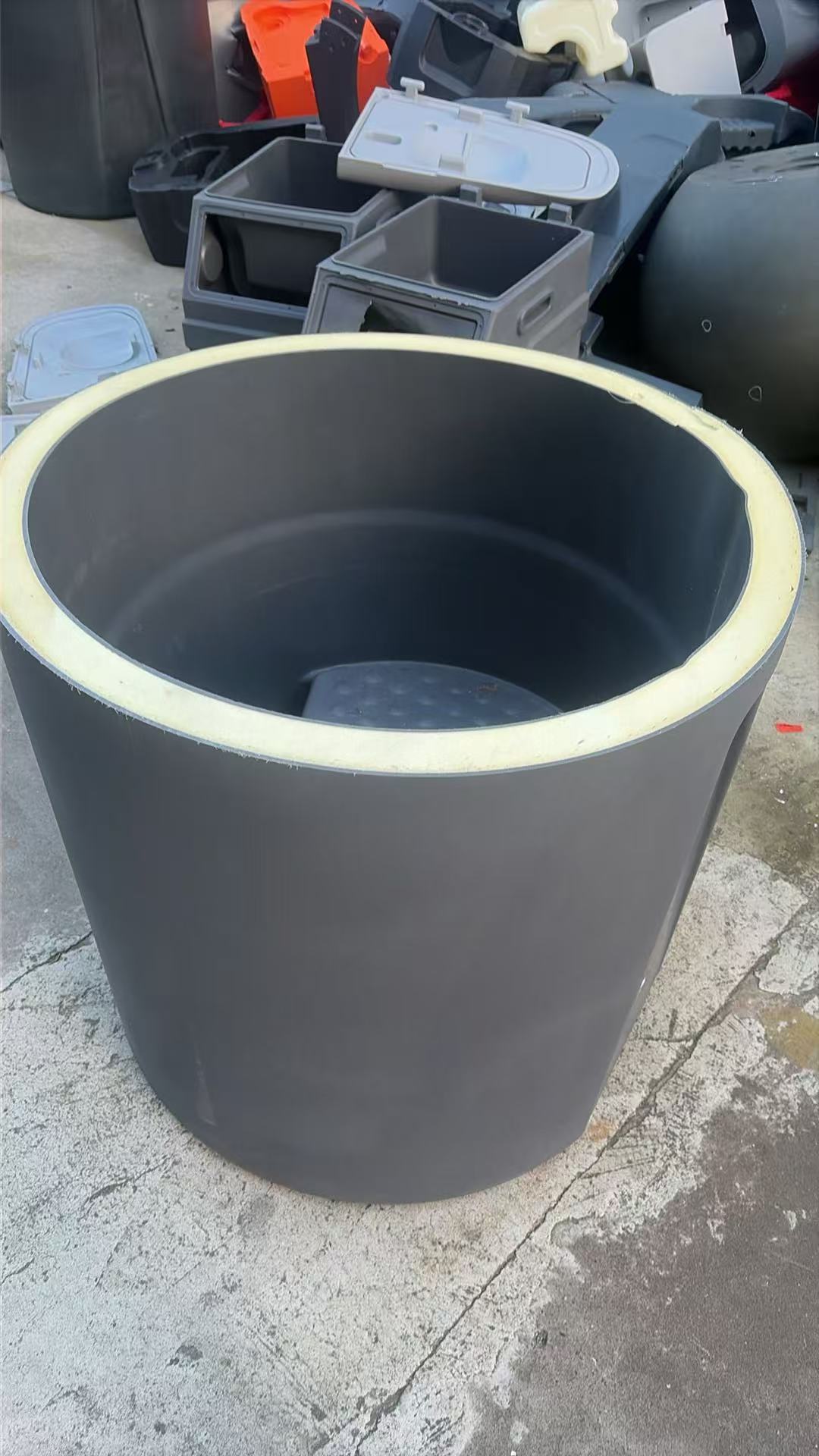
When sourcing cold plunge tubs for commercial wellness centers, gyms, or private-label brands, performance comes down to a single engineering factor: thermal retention.
While exterior aesthetics and water chiller compatibility matter, the internal insulation material ultimately dictates how fast water cools, how long it stays cold, and how much energy your water chiller consumes.
In commercial-grade manufacturing, High-Density Polyurethane (PU) Foam injection has emerged as the industry standard. Here is why PU insulation is the key difference-maker in premium rotomolded ice baths.
1. Exceptional R-Value: Maximizing Thermal Retention
Polyurethane boasts one of the highest R-values (thermal resistance rating) per inch among all commercial insulation materials.
Unlike single-walled plastic tubs or inflatable PVC setups that constantly leach cold energy into the ambient air, a double-walled LLDPE tub injected with high-density PU foam creates an impenetrable thermal barrier.
- Slower Temperature Rise: Water stays at near-freezing temperatures for hours, even when placed outdoors under direct sunlight or in high-ambient heat.
- Overnight Efficiency: Facility operators can power down chillers off-peak without waking up to tepid water the next morning.
2. Reducing Chiller Load & Lowering Electricity Costs
A common complaint from commercial facility owners is the soaring electricity cost of running heavy-duty water chillers 24/7.
When an ice bath lacks proper PU insulation, the chiller’s compressor must continuously cycle on and off to battle ambient heat gain.
- Compressor Protection: PU foam insulation keeps water cold naturally, reducing compressor run-time by up to 35%–50%.
- Extended Hardware Lifespan: Less strain on the chiller’s cooling system means fewer maintenance calls, reduced component wear, and lower long-term operating costs for your clients.
3. Structural Integrity: Preventing Wall Flexing & De-molding Warp
PU foam isn’t just an thermal insulator—it is a structural core.
During high-pressure polyurethane injection, the liquid foam expands to fill every micro-cavity between the inner and outer rotomolded shells. As it cures, it bonds tightly to the inside walls:
- Eliminating Hollow Weaknesses: The cured foam turns the double-walled shell into a solid, rigid composite structure capable of supporting hundreds of liters of water and heavy commercial foot traffic.
- Preventing Surface Deformation: It reinforces the LLDPE walls against bowing or flexing over time, ensuring long-term structural stability even under high ambient temperature fluctuations.
4. PU Foam vs. Air Insulation vs. Styrofoam (EPS)
How does high-density PU foam stack up against alternative manufacturing methods?
| Feature | Injected High-Density PU Foam | Air Gap (Hollow Double-Wall) | EPS (Styrofoam / Expanded PS) |
| Thermal Insulation | Superior (Highest R-Value) | Poor (Rapid thermal loss) | Moderate |
| Structural Rigidity | Extreme (Bonds inner & outer shell) | Weak (Prone to wall flexing) | Moderate |
| Moisture Resistance | High (Closed-cell structure) | Low (Condensation risk) | Medium (Absorbs moisture over time) |
| Commercial Suitability | Commercial & Premium Brands | Entry-level / Budget | Mid-tier consumer products |
Build Your Next OEM Cold Plunge Line with Poplunge
At Poplunge, we specialize in precision rotomolding paired with high-density polyurethane foam injection technology. Our engineered wall geometries and automated foam-dosing systems guarantee zero void spaces, maximum thermal retention, and rock-solid durability for global wellness brands.
Looking to customize high-insulation rotomolded ice baths for your brand?
Contact our engineering team today to explore custom mold dimensions, colorways, and OEM manufacturing solutions.